

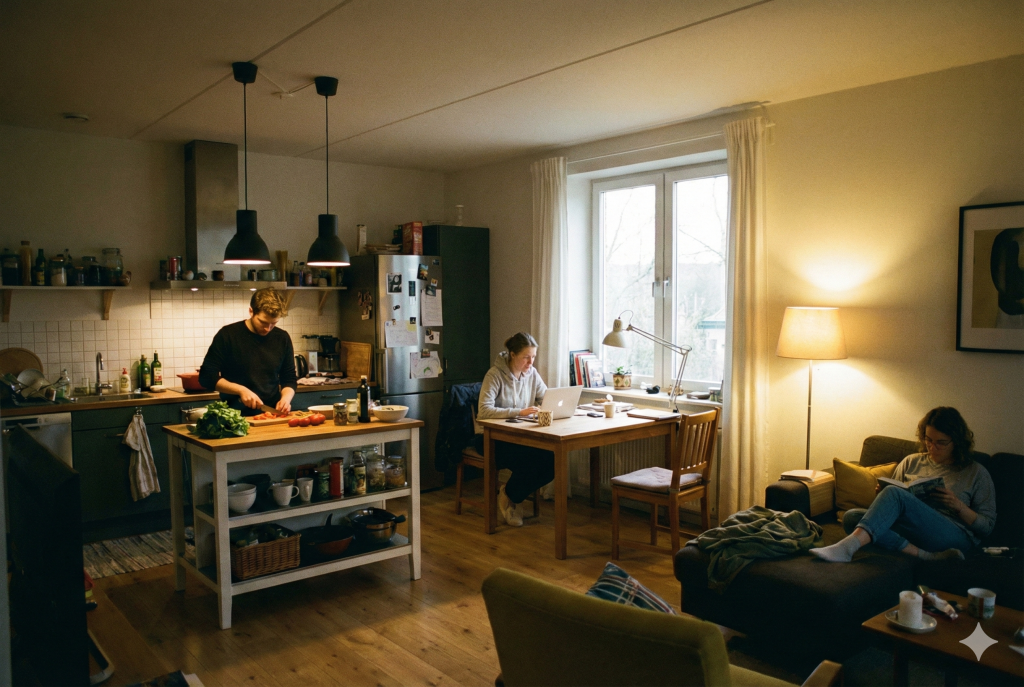
If you are setting up a home office for standard computer work, then you should aim for 300 to 500 lux on your desk surface. If you are performing highly detailed tasks like drafting, sewing, or repairing electronics, then you need to push that brightness to 500–750 lux. Stop assuming that “brighter is always better”; the true cause of most daily eye strain is actually an extreme contrast imbalance in your room, not a lack of total light.
Technical Traffic Lights: Matching Lux to the Task
The amount of light you actually need depends entirely on visual demand, not personal preference.
Lux measures how much light physically reaches your surface, but your visual comfort depends on how your eyes interact with that specific intensity. Once your lighting exceeds what the task actually requires, your comfort rapidly decreases rather than improves.
Here is the scientifically backed breakdown for common daily activities:
| Activity Type | Typical Lux Range | Visual Demand | Comfort Result |
| Relaxing / Watching TV | 100–200 lux | Low | Very comfortable; promotes wind-down. |
| Casual Reading / Paperwork | 200–300 lux | Medium | Comfortable for short durations. |
| Computer & Desk Work | 300–500 lux | Medium–High | Optimal balance of focus and comfort. |
| Precision Work (Crafting) | 500–750 lux | High | Necessary for detail, but requires glare control. |
| Over-lit Setups | 1000+ lux | Excessive | Often fatiguing for general daily tasks. |
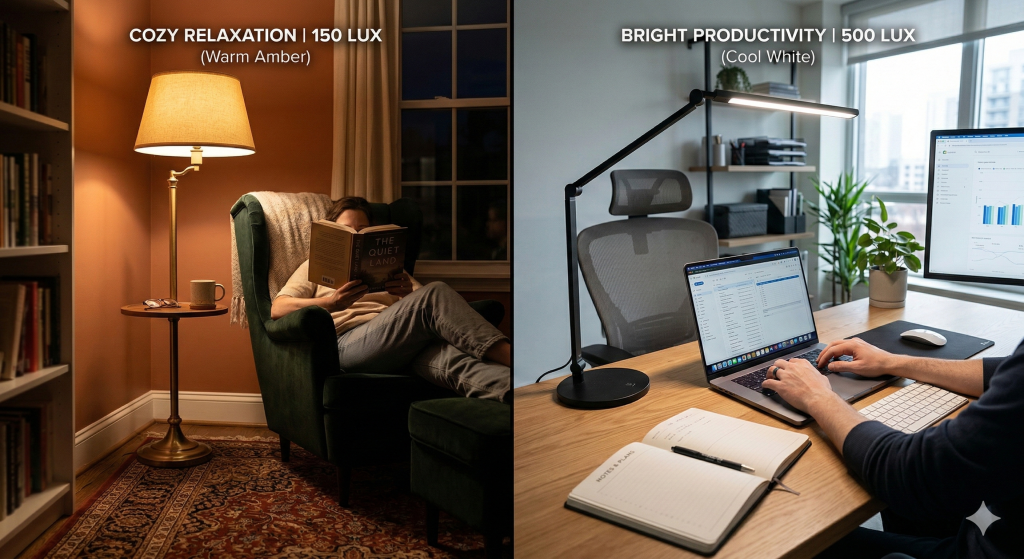
Why Brightness Alone Doesn’t Solve Eye Strain
Most people try to fix tired eyes by buying a brighter desk lamp. This usually makes the problem worse. What truly matters is how light is distributed and how your eyes adapt to it.
Your eyes work hardest when brightness levels vary too wildly within your field of view. If you have a perfectly illuminated 500-lux desk, but the rest of your room is pitch black, your pupils are forced to constantly expand and contract as you look from your keyboard to the dark wall. This contrast ratio is the number one cause of visual fatigue.
Furthermore, Light Quality (CRI) matters just as much as intensity. Even at the correct brightness, a low-CRI light (below 80) can make objects appear dull and unnatural. Upgrading to a CRI of 90+ improves visual clarity and drastically reduces visual stress.
Editor’s Note: My 7-Day Lux Test
What I assumed: I assumed my home office was simply too dim, so I bought a massive, high-output LED desk lamp that blasted over 1000 lux directly onto my desk.
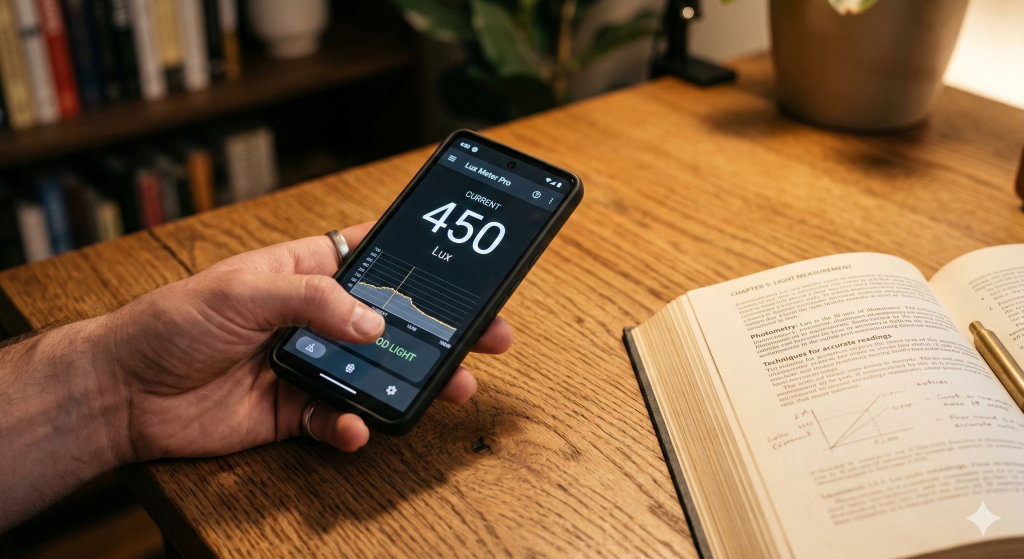
What my hands-on test revealed: Within an hour of working, I had a tension headache. I downloaded a light meter app and realized the problem: my desk surface was reflecting 1000+ lux, while the wall behind my monitor was nearly completely dark. The contrast was violently extreme.
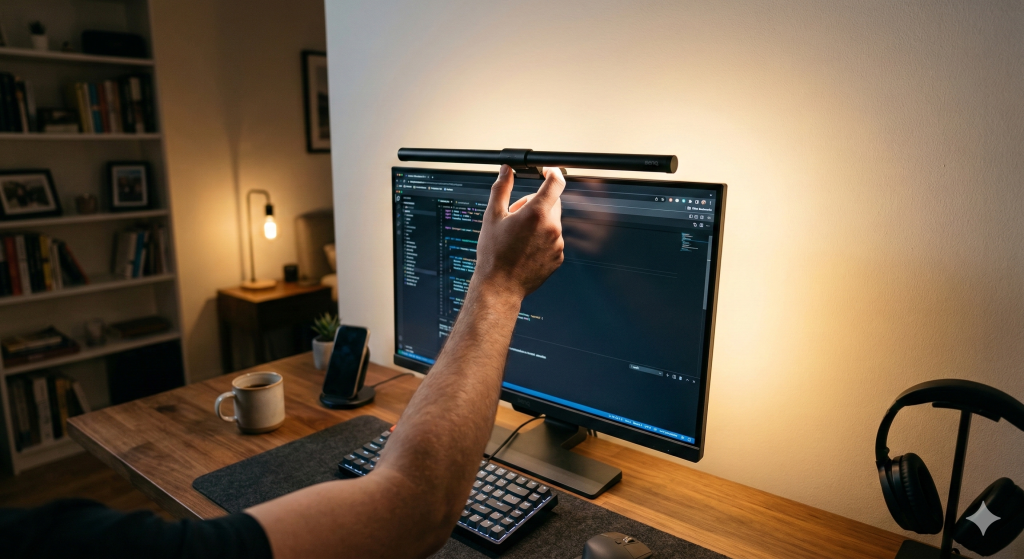
The Corrected Result: I dialed the desk lamp down to a much softer 400 lux and placed a warm ambient light strip behind my monitor to brighten the dark wall. By balancing the room’s contrast rather than just maximizing the desk brightness, my discomfort disappeared immediately.
Practical Tips You Can Use Immediately
To achieve perfectly balanced lighting for your daily routine, follow these actionable rules:
- Adjust position before increasing brightness: Try moving your lamp head closer to your task before buying a higher-lumen bulb.
- Balance your backgrounds: Keep your ambient room lighting relatively close to your screen’s brightness level to prevent extreme contrast.
- Avoid the “Interrogation Room” effect: Never rely on a single, harsh overhead light source. Layer your lighting with floor lamps and desk lamps.
- Reduce contrast first: If your eyes feel tired, do not turn up the brightness. Turn on a background light instead.
FAQ
Is 1000 lux too bright for reading? Yes, for most people, 1000 lux is brighter than necessary for reading and will quickly cause harsh glare. It should be reserved exclusively for highly detailed precision work (like jewelry making or model painting) where the light is heavily diffused.
What is the best light color for desk work? A cool, crisp white light between 3500K and 5000K is ideal for daytime focus and productivity. However, for evening use, switching to a warmer light around 2700K to 3000K is far more comfortable and less disruptive to your natural sleep cycle.
Can bad lighting permanently damage your eyes? No. Poor lighting does not usually cause permanent physiological eye damage. However, it can lead to severe eye strain, tension headaches, and chronic fatigue. These symptoms almost always disappear once you fix your lighting contrast.