

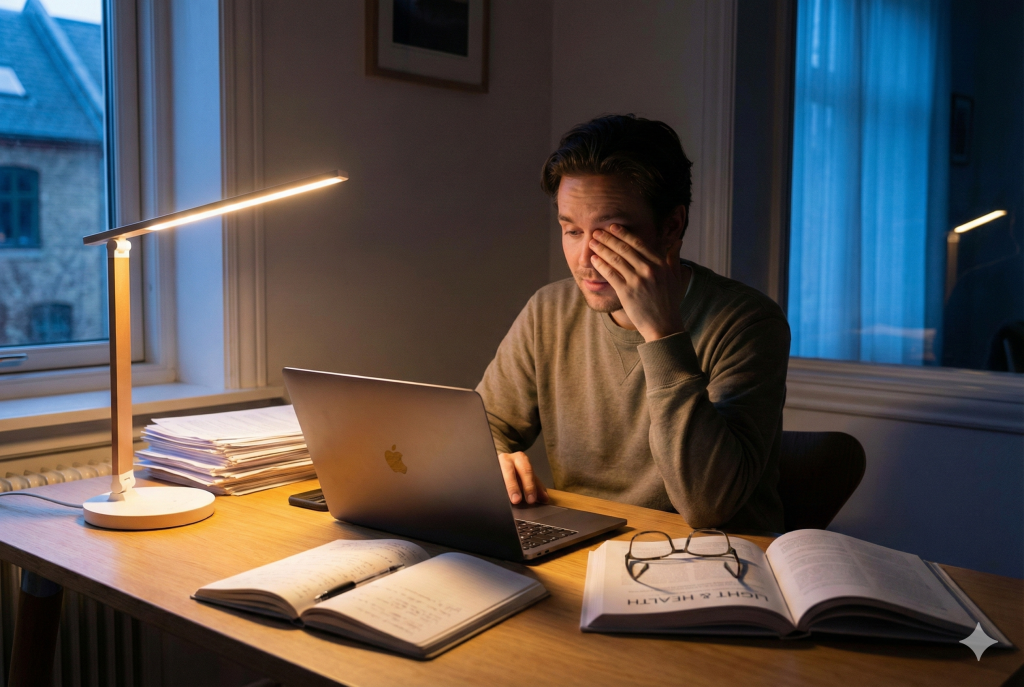
If you are using a cool-white desk lamp during the day, then the blue light it emits is actively helping you stay alert and focused. However, if you are experiencing eye strain or struggling to fall asleep at night, do not immediately blame the blue light from your lamp—the true culprit is almost always excessive brightness (lux) and harsh glare.
Technical Traffic Lights: What Blue Light Actually Is
Blue light sits in the short-wavelength, high-energy portion of the visible light spectrum (≈400–500 nm). It exists naturally in daylight, which is how our bodies know it is time to be awake.
The biggest confusion around this topic happens because consumers mix up two very different types of light exposure:
- Self-Emitting Blue Light: This comes directly from your computer screens, tablets, and smartphones, shooting straight into your retinas.
- Reflected Blue Light: This is the light from your desk lamp bouncing off your notebook or desk mat before reaching your eyes.
The biological concern with desk lamps is almost never physical eye damage. Instead, the issue is circadian signaling. Blue light suppresses melatonin production and tells your brain, “It is daytime.” That is extremely helpful for a 10 A.M. work session, but highly destructive for a 10 P.M. reading session.
Common Blue Light Myths (Corrected by Science)
Let’s clear up the marketing fear with actual technical standards. Most high-quality modern desk lamps fall under the IEC 62471 – Exempt Group, meaning they pose absolutely no photobiological risk to your eyes under normal use.
- Myth: “All blue light is harmful and causes eye damage.” Fact: Desk lamps do not damage eye tissue. The blue wavelengths they emit simply affect your circadian rhythm (sleep cycle).
- Myth: “Blue light is the main reason my eyes hurt at my desk.” Fact: Human eyes are most sensitive around the 555 nm wavelength. Blue light feels “sharper” because it increases contrast. Discomfort and headaches usually come from high glare and poor lux contrast in your room, not the blue wavelength itself.
- Myth: “Warm light is always better for my eyes.” Fact: Warm light is only better at night. During the day, neutral or cool light (which contains more blue) significantly improves visual clarity and reading speed.
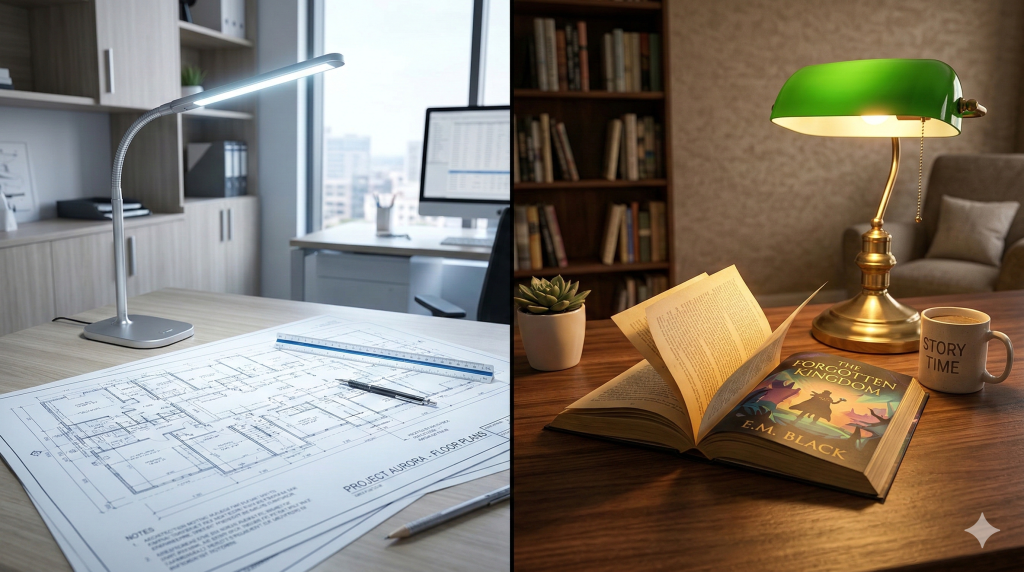
Editor’s Note: The Evening Reading Test
What I assumed: I used to believe that reading under a bright, cool-white (5000K) desk lamp was the best way to prevent eye strain because the text looked so incredibly sharp.
What my hands-on test revealed: I tested two setups for my evening reading routine: a cool-white lamp and a warm-white (3000K) lamp, matching the exact same brightness (lux) for both. Under the cooler light, I found myself blinking rapidly, and the paper texture felt harsh. Under the warm light, my eyes relaxed instantly. But the biggest shock was my sleep tracker: the nights I used the cool-white light, it took me an extra 45 minutes to fall asleep.
The Corrected Result: Brightness affects immediate physical comfort, but color temperature (blue light) hijacks your biological clock. You must lower the blue light output 2 hours before bed.
Practical Advice to Protect Your Eyes (and Sleep)
You do not necessarily need to buy expensive blue-light blocking products if you manage your lighting environment correctly:
- Use cooler light (blue-enriched) during daytime work to maximize focus.
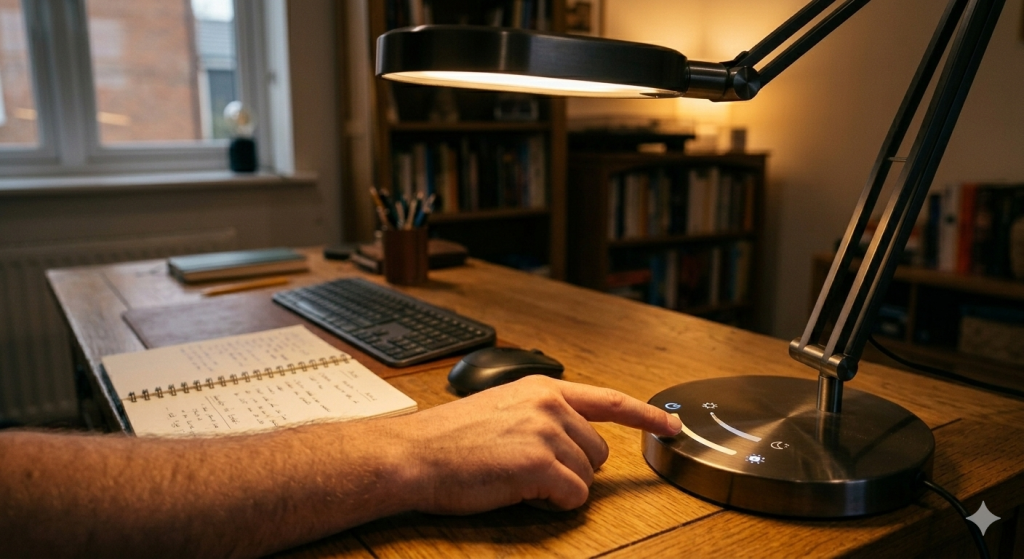
- Switch to a warmer color temperature after sunset to allow your natural melatonin to rise.
- Reduce overall brightness (lux) before changing color. A dim blue light is often less disruptive than a blindingly bright warm light.
- Avoid direct glare. Make sure the lamp head is angled so the LED chips are never directly visible to your eyes.
FAQ
Is the blue light from desk lamps actually harmful? No. At standard desk lamp brightness levels, the blue light emitted does not cause macular degeneration or damage your retinas. The primary side effect is sleep disruption if used late at night.
Should I wear blue light glasses while reading under a desk lamp? If you are reading a physical paper book, blue light glasses are usually unnecessary, provided you are using a warm color temperature lamp at a comfortable brightness.
Is brightness more important than blue light for eye strain? Yes. In almost all home office setups, excessive desk brightness, harsh shadows, and screen glare contribute far more to daily eye fatigue than the specific color temperature of the bulb.